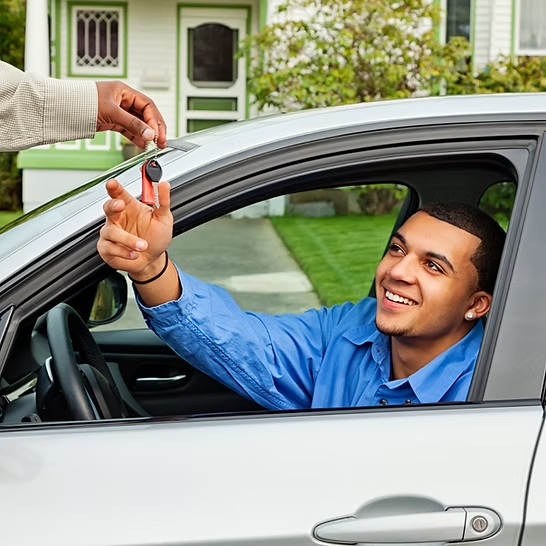
Many people who borrow cars—as well as the owners who let them—don’t always understand the implications of insurance and responsibility.
It’s astonishing how few people are aware of who is responsible for damage when a friend’s automobile is involved. There is a widespread misconception that auto insurance is personal to the driver. In actuality, insurance is connected to the car.
In Maryland, if you get into an accident while driving someone else’s car, the driver is considered to be the owner’s representative.
This means that the driver is responsible for any damages or injuries that occur during the accident. However, if you are the owner of the car and you have given someone explicit permission to borrow it, you may still be held responsible for any damages or injuries that occur in an accident. It is important to carefully consider the responsibility of the borrower before lending out your car.
If you borrow a car from your brother and get into an accident, your brother’s insurance policy would typically cover the costs of any property damage and personal injury claims. However, this could result in your brother having to pay higher insurance premiums. It is also important to note that if you cause an accident while driving someone else’s car in Maryland, injuries may occur and the vehicle may be damaged. In this situation, it may be necessary to seek the assistance of a Maryland personal injury attorney.
The insurance policy of the automobile owner will be primarily responsible for covering the costs of the accident if someone else who is driving your car is hurt in it.
However, a portion of the claim can also be covered by the driver’s insurance coverage. For example, the Medical Payments Coverage (Med Pay) of the driver’s policy may pay up to its limits, and the Personal Injury Protection (PIP) coverage of the car owner’s policy may pay up to its limits regardless of fault. Claims that exceed the limits of the car owner’s policy may be covered by the driver’s liability insurance. For more information, contact a Maryland personal injury attorney.
In Maryland, the owner’s insurance policy serves as the primary source of liability protection when someone else is injured while operating a borrowed vehicle.
The driver’s liability insurance acts as secondary coverage. This means the driver’s policy may pay the remaining balance if damages exceed the limits of the automobile owner’s policy.
You should be aware that lending your automobile to someone who causes an accident resulting in injuries may lead to a significant increase in your insurance premiums.
If a car owner allows a careless driver to use their vehicle, they may be held liable under the legal doctrine of Negligent Entrustment in Maryland.
This means the owner may be held responsible even if they were not driving or present in the vehicle at the time of the accident. Examples include lending a car to someone under the influence of drugs or alcohol, a minor, a person with a suspended license, a driver with a history of traffic violations, or an elderly driver whose license has been suspended.
If your car is stolen in Maryland and involved in a collision, you generally should not be held responsible for damages or injuries caused by the thief.
You may use the theft of your vehicle as a defense if someone attempts to hold you accountable. It is important to report the theft to law enforcement immediately. If you carry comprehensive insurance, your insurer should cover damage to your vehicle caused by the thief.
In rare cases, an injured party may attempt to sue the vehicle owner by alleging negligence, such as leaving the keys in the car or failing to insure the vehicle. In such cases, the burden of proof lies with the person bringing the claim.
If the thief is uninsured or flees the scene, injured victims may need to file a claim under their own Uninsured/Underinsured Motorist (UM/UIM) coverage. In this situation, the victim’s own insurance company would handle the claim.
If you were hurt in a Maryland vehicle accident and need legal representation, you may schedule a free initial consultation with us. All situations are unique, and this site is not intended to provide legal advice. Contact us at brad@bauhoflegal.com or call +1 (410) 876-4500.